Staying in a Milos Syrma: The 2026 Guide to Traditional Waterfront Living
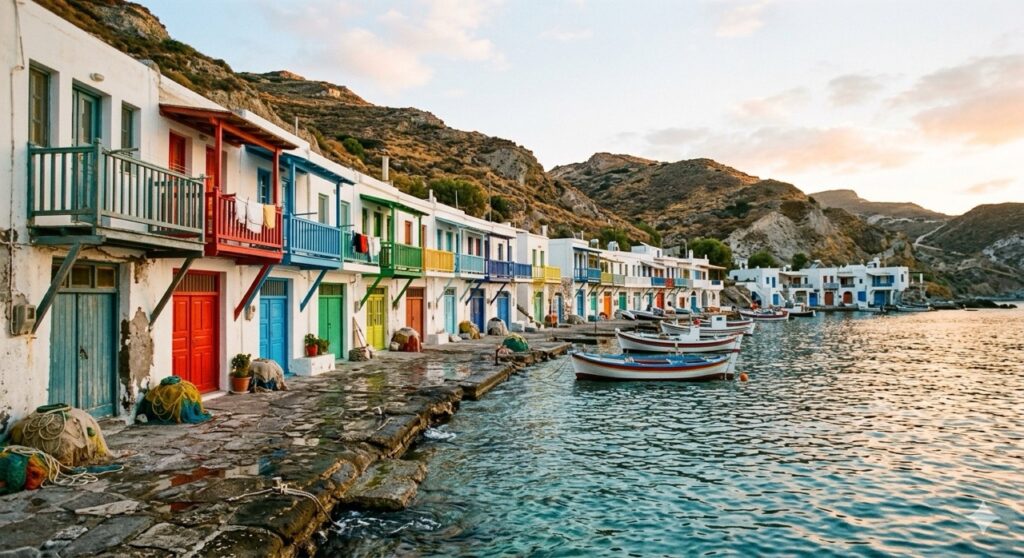
The first thing you notice is the color. Bright wooden doors red, blue, emerald glow against white stone walls as the Aegean laps quietly beneath them. The scent of salt and wild thyme drifts through narrow lanes, and fishing boats rock gently beside centuries-old Cycladic architecture. If you’re dreaming about a truly unique Greek island experience, choosing to Stay in a Syrma Milos is about as authentic as it gets.
These traditional waterfront boathouses called syrmata sit directly on the sea. What once protected fishing boats now hosts travelers seeking a slower rhythm of island life. But before you pack your bags, there are a few local realities worth understanding.
Quick Overview for Staying in a Syrma
| Info | Details |
|---|---|
| Location | Coastal fishing villages across Milos |
| Best Time to Stay (2026) | May–June & September for calm weather |
| Accessibility | Short drive from Adamas port |
| Why Go | Authentic fishing houses, sea-level living |
From Functional Boat Sheds to Boutique Stays: The History of Syrmata
Long before travelers discovered them, syrmata served a simple purpose.
Local fishermen needed a place to store their boats during winter storms. So they built narrow stone structures with wooden doors facing the sea. Boats rolled directly into the ground floor, while the upper level functioned as a small living space.
Over time these houses became part of Milos’ cultural identity.
Villages like Klima and Mandrakia preserved the style, with rows of colorful boathouses lining quiet coves.
Today many syrmata have transformed into boutique accommodations while still keeping their traditional layout.
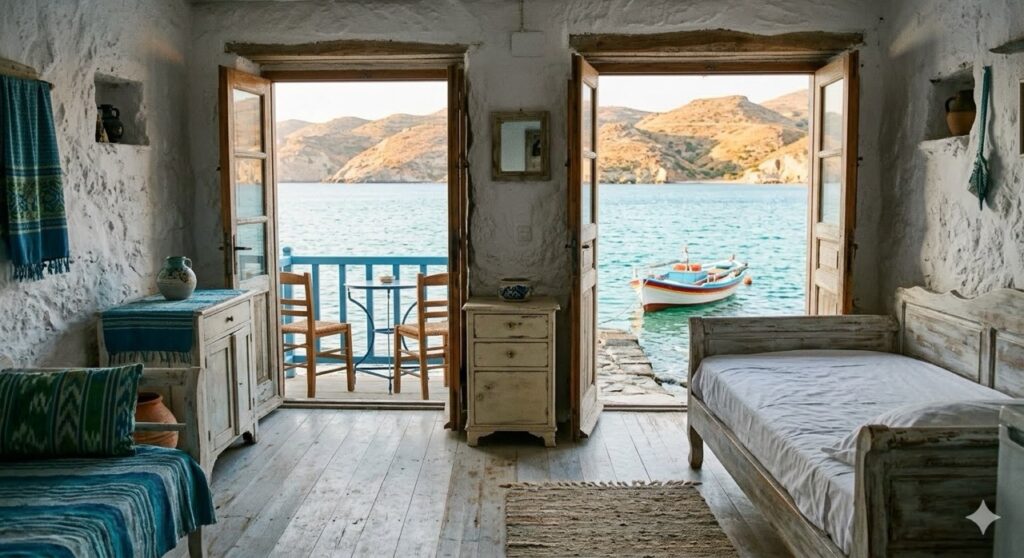
Unlike large resorts, staying here feels intimate. You wake up with the sound of water beneath the floorboards and fall asleep to the rhythm of small fishing boats returning at dusk.
Settlement Comparison: Finding Your Niche in Klima or Mandrakia
Not all syrmata locations offer the same experience.
Two villages dominate the conversation when travelers research how to Stay in a Syrma Milos.
Klima Village Boathouses
Klima may be the most photographed village on the island.
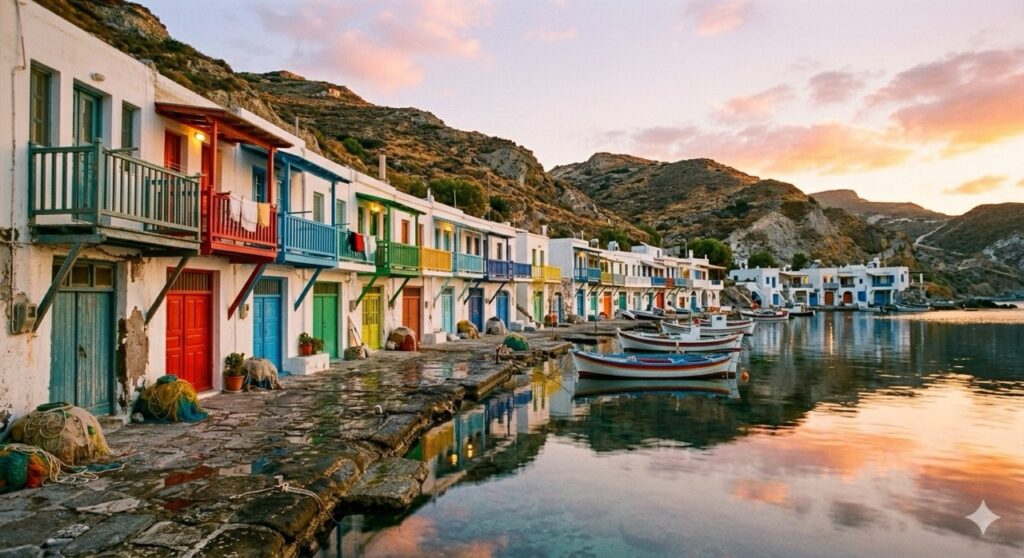
Pros:
- iconic colorful houses
- spectacular sunset views
- close to Adamas and Plaka
Cons:
- very small village
- limited privacy during peak season
- heavy photography traffic during sunset
Mandrakia Architecture
Mandrakia offers a quieter alternative.
Pros:
- peaceful fishing harbor
- excellent seafood tavernas
- fewer crowds
Cons:
- slightly farther from nightlife
- smaller number of rental properties
A third option many travelers overlook is Skinopi, a tiny fishing settlement where sunsets feel almost private.
The golden light reflecting off volcanic perlite cliffs creates one of the most underrated evening views on the island.
The Logistical Realities: What Instagram Doesn’t Show (Water & Power)
Syrmata look magical online, but they come with a few practical quirks.
These buildings were never designed as luxury hotels.
Expect charming imperfections.
Common realities when you stay in a syrma
- narrow staircases
- compact kitchens
- older plumbing systems
- limited natural ventilation
Water supply on smaller villages sometimes depends on storage tanks, meaning long showers may not always be practical.
Electric power is stable in most places today, but older buildings occasionally experience brief interruptions during peak summer demand.
Most travelers find these details part of the charm rather than a problem.
Still, it’s helpful to arrive with realistic expectations.
The “Ferry Wake” Protocol: Protecting Your Living Room from Waves
One of the most important things to understand when you Stay in a Syrma Milos is something locals call the ferry wake.
Large ferries passing near the island can send rolling waves into small fishing coves.
These waves occasionally reach the ground floor of syrmata, especially in villages like Klima.
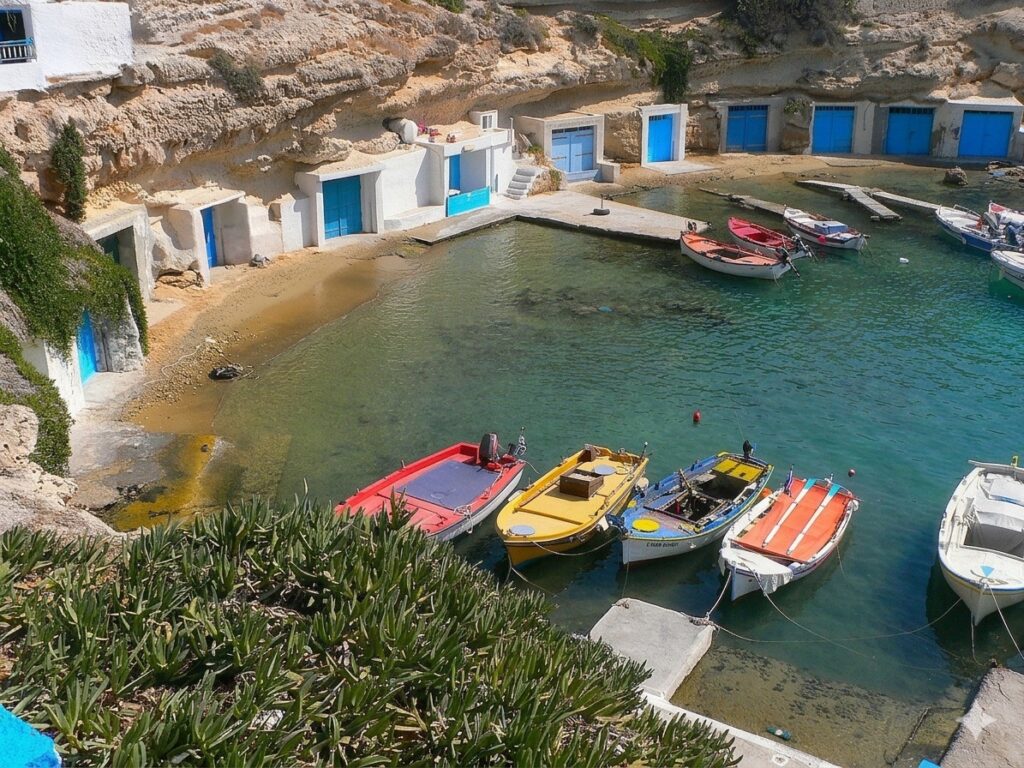
Locals follow a simple protocol:
- keep the lower doors closed during ferry traffic
- avoid leaving belongings near sea-level entrances
- check ferry schedules if the sea becomes rough
This doesn’t happen every day, but experienced hosts always warn guests.
Once you understand the rhythm of ferry traffic, it becomes easy to manage.
The 2026 Booking Economy: Price vs. Availability
Demand for syrmata has exploded in recent years.
By 2026, travelers often need to plan far ahead to secure the best properties.
Many of the most charming houses are fully reserved six months in advance, especially during July and August.
Typical 2026 Price Range
| Property Type | Nightly Price |
|---|---|
| Simple syrma studio | €160–€220 |
| Renovated boutique syrma | €250–€380 |
| Premium waterfront syrma | €400+ |
Another cost travelers should know about is the Climate Resilience Fee, introduced across Greece.
Climate Resilience Fee (High Season April–October)
| Accommodation Category | Fee |
|---|---|
| Apartments / small rentals | €2 per night |
| 3-star equivalent | €5 |
| 4-star equivalent | €10 |
| Luxury villas | €15 |
This tax must be paid locally at check-in, even when you reserve online.
For travelers hoping to Stay in a Syrma Milos, the best strategy is simple:
- start researching early
- confirm availability well ahead of summer
- choose quieter months if possible
The reward is waking up directly above the Aegean Sea—something few places in Europe can offer.
FAQ
Are syrmata comfortable for overnight stays?
Yes, most renovated syrmata now include modern bathrooms, air conditioning, and kitchens while preserving their traditional layout.
Is Klima village too crowded in summer?
Klima becomes busy around sunset due to photography visitors, but mornings and evenings remain peaceful.
Do syrmata flood from waves?
Occasionally ferry wake waves reach the lower level. Hosts advise keeping sea-level doors closed during rough conditions.
How early should I book a syrma in Milos?
For summer 2026 travel, booking five to six months ahead gives the best selection.
Check this article Best sunrise spots and morning activities