
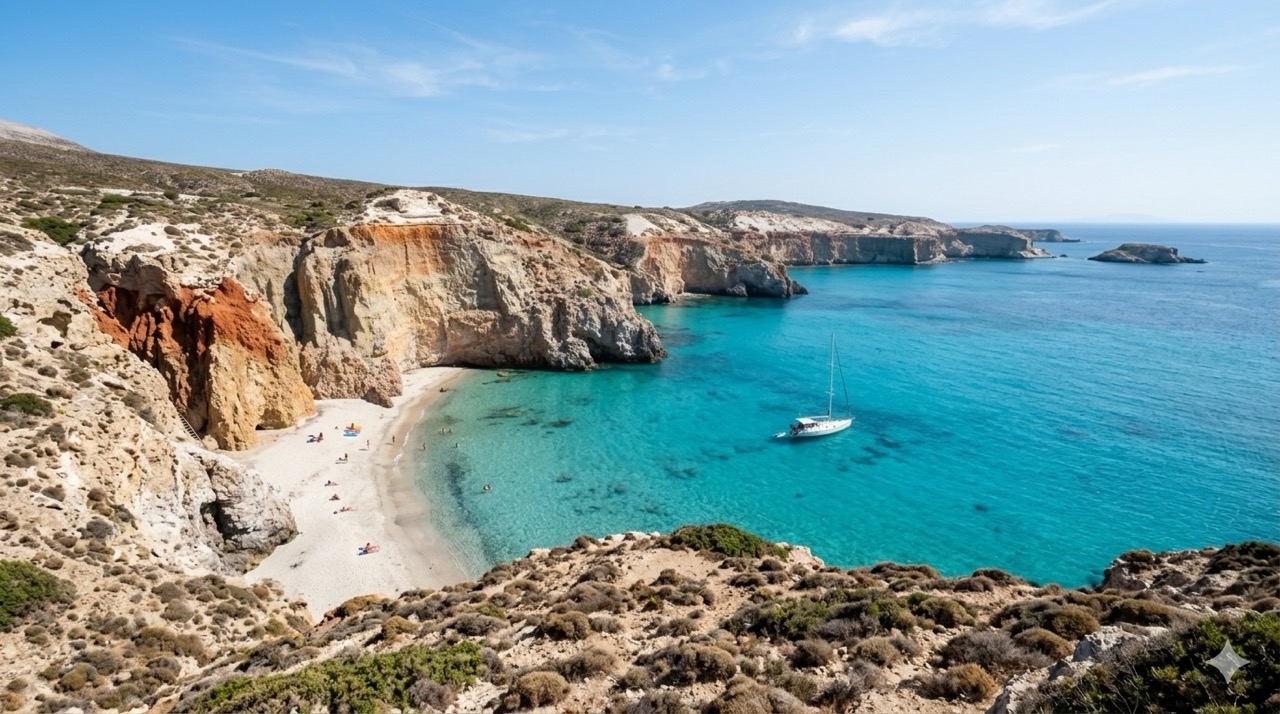
Understanding the Meltemi: How to Pick the Perfect Milos Beach Based on Wind
The wind begins as a whisper across the cliffs above Sarakiniko. Within minutes it becomes a steady push of dry northern air carrying the scent of salt and sun-baked stone. Locals glance at the sea, check the whitecaps, and instantly change their beach plans. If you’re visiting the island in summer, understanding the Milos beach wind protection guide can completely transform your experience. The famous Meltemi, also known as the North Etesian wind, dominates the Cyclades during July and August. Knowing which coast is sheltered and which one turns rough can mean the difference between crystal-calm swimming and crashing waves.
Quick Overview
| Info | Details |
|---|---|
| Location | Milos Island, Cyclades, Aegean Sea |
| Peak Wind Season | July–August (Meltemi period) |
| Typical Wind Direction | North / Northeast |
| Why It Matters | Determines which beaches are calm |
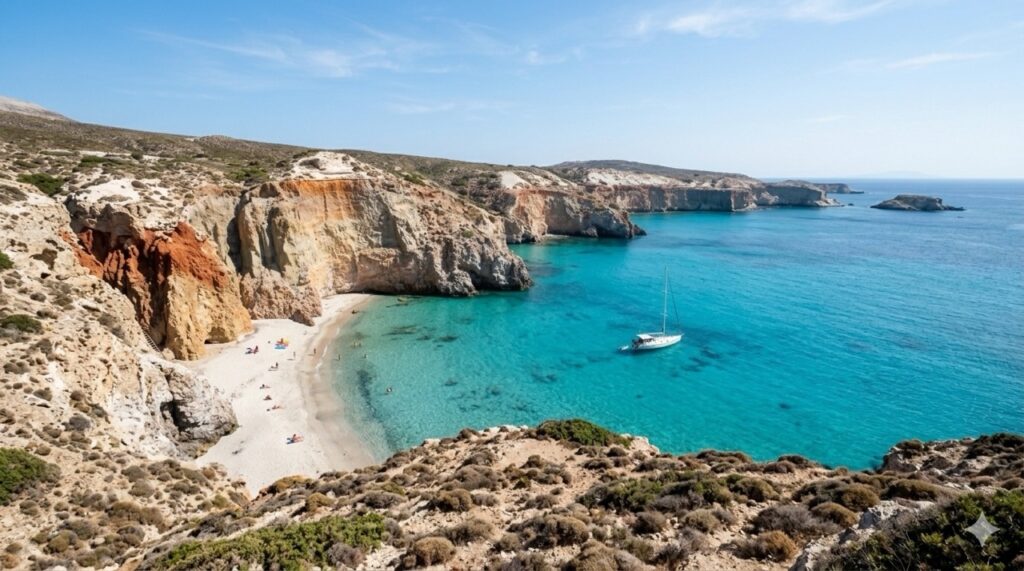
What is the Meltemi? The 2026 Forecast for July and August
The Meltemi is a seasonal wind system that sweeps across the Aegean every summer. Meteorologists call it the North Etesian wind, and it typically blows from the north or northeast.
Unlike short storms, the Meltemi can last for days.
Wind strength is often measured on the Beaufort scale, which many local sailors and fishermen use daily.
Typical summer pattern in Milos:
| Beaufort Level | Wind Description | Beach Conditions |
|---|---|---|
| 3–4 | Light breeze | Calm swimming |
| 5–6 | Strong breeze | Waves on north coast |
| 7+ | Very strong wind | Northern beaches rough |
In recent years—including forecasts for summer 2026—July and August usually bring several multi-day Meltemi episodes.
Locals simply adapt their plans and head to the protected side of the island.
The “North Wind” Rule: Why You Should Head to the South Coast Today
Once you understand the Milos beach wind protection guide, one rule becomes very simple.
North wind = go south.
Because the Meltemi blows from the north, the southern coastline becomes the leeward shore, protected from waves.
Meanwhile the northern coast becomes the windward side, where waves and wind intensify.
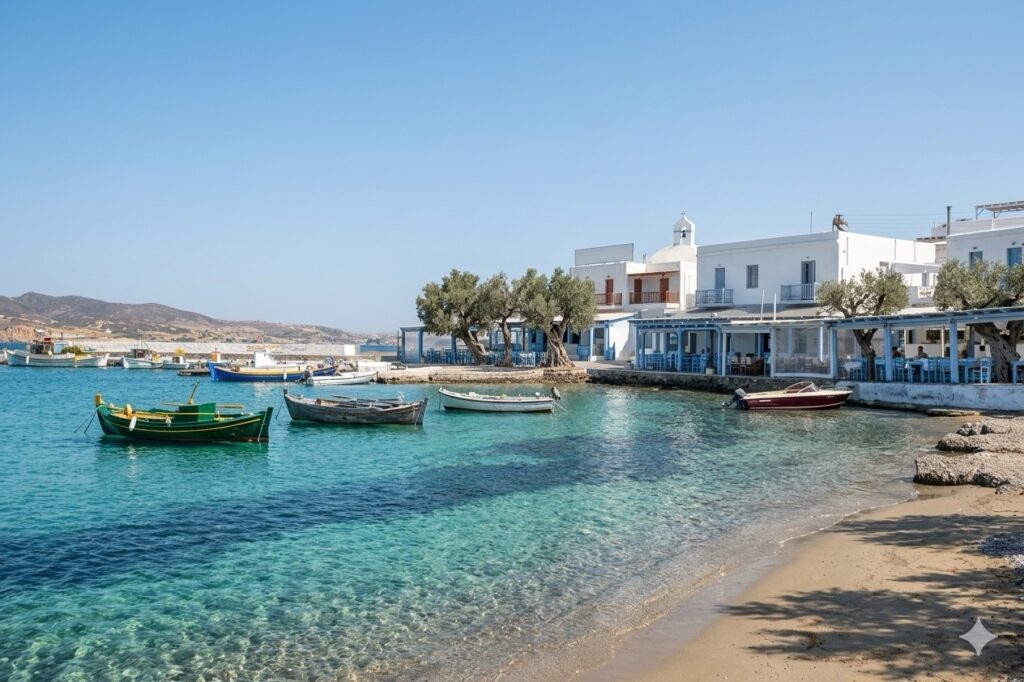
This means beaches like Paleochori, Provatas, and Agia Kyriaki often stay calm even when strong winds sweep the island.
Local beachgoers check the wind direction first thing in the morning before deciding where to go.
Sarakiniko in the Wind: When to Visit for Photos vs. When to Swim
One of the most famous locations affected by wind is Sarakiniko.
The white volcanic landscape looks spectacular in any weather, but the sea behaves very differently depending on wind conditions.
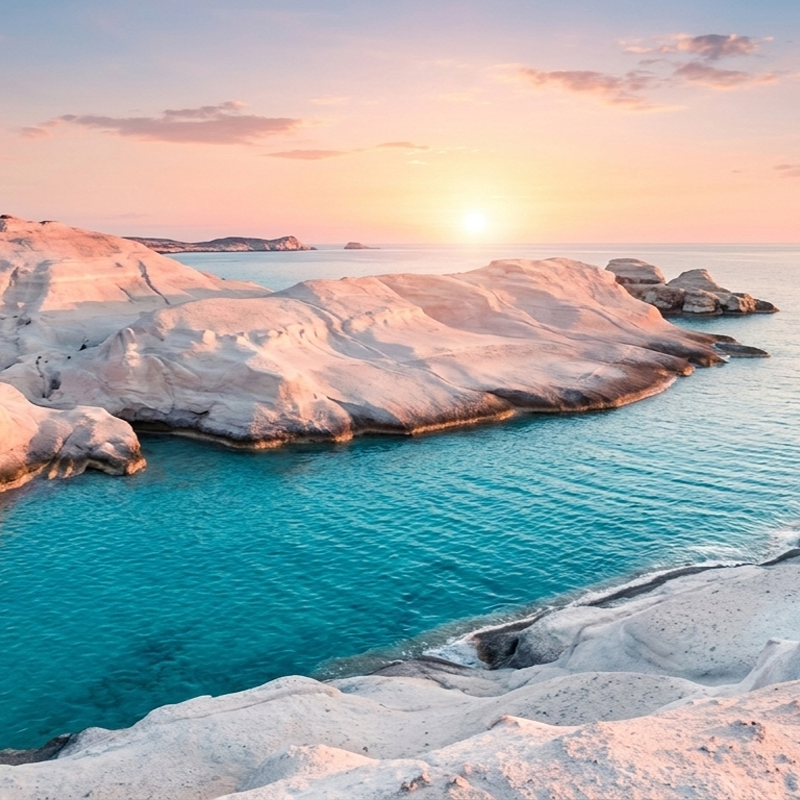
When the Meltemi blows strongly from the north:
- waves crash dramatically against the rocks
- swimming becomes difficult
- spray sometimes reaches the cliffs
However, these same conditions create incredible photography.
The contrast between the white perlite formations and deep blue waves makes Sarakiniko look almost lunar.
For swimming, calmer mornings or non-windy days are far better.
Best Sheltered Beaches: Paleochori, Provatas, and Agia Kyriaki
If the Meltemi is blowing and you’re following the Milos beach wind protection guide, the south coast usually offers the best conditions.
Paleochori Beach
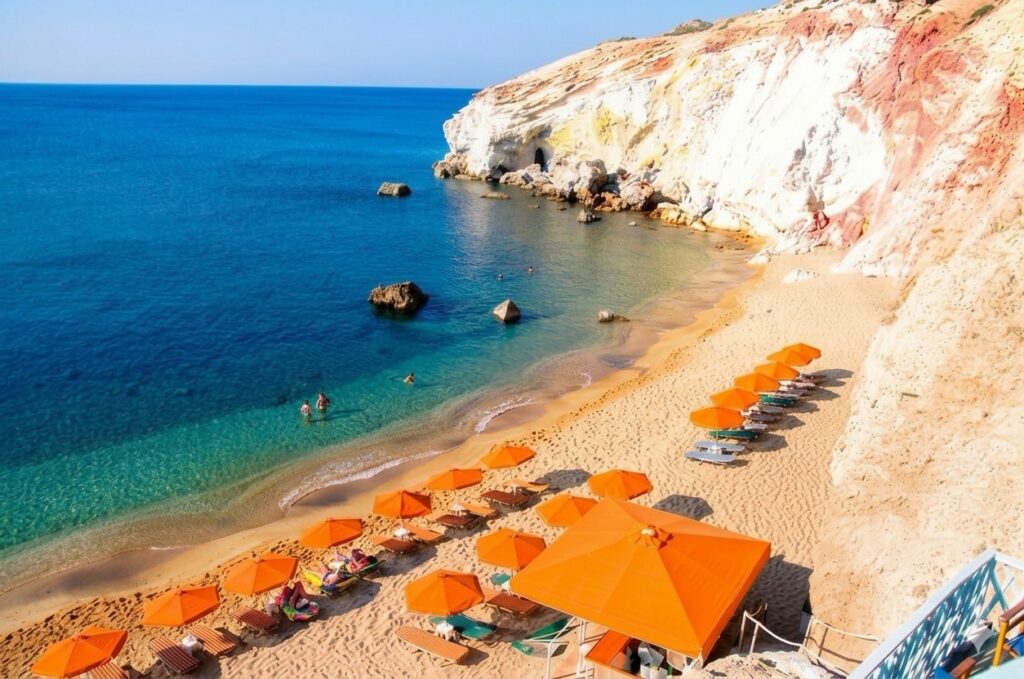
Paleochori sits inside a naturally protected bay.
The cliffs block northern wind, keeping the water calmer than most beaches during Meltemi days.
Provatas Beach
Provatas offers a wide sandy shoreline and shallow water.
Families often prefer this beach because the protected location reduces wave energy.
Agia Kyriaki Beach
Agia Kyriaki lies close to Paleochori and shares the same wind shelter.
Its mix of pebbles and sand keeps the water exceptionally clear even when wind speeds increase.
Insider Tip
Insider Tip: Locals check the wind lines on the sea near Pollonia harbor each morning. If you see whitecaps forming there, it means the Meltemi is building and northern beaches like Sarakiniko will soon turn rough. Head directly to Paleochori before the crowds realize what’s happening.
Inter-Island Ferry Disruptions: How High Winds Affect Your 2026 Schedule
Strong Meltemi winds affect more than beaches.
They can also disrupt inter-island ferry routes across the Cyclades.
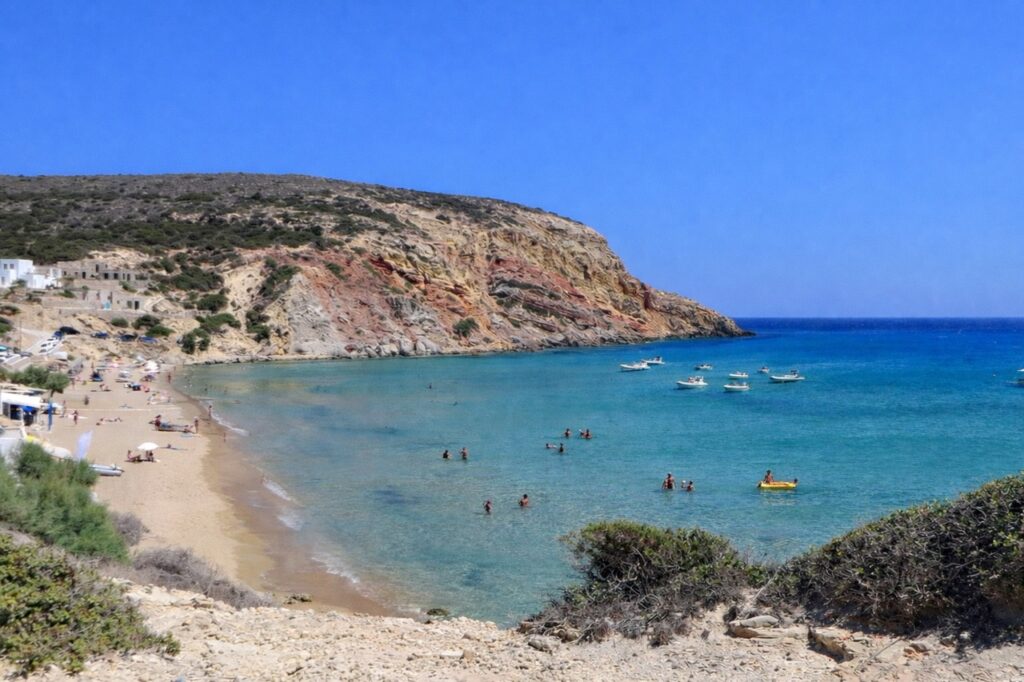
When wind speeds exceed Beaufort 7, ferry operators occasionally delay or cancel departures for safety.
This doesn’t happen often, but during strong Meltemi periods travelers should keep schedules flexible.
A few simple strategies help avoid stress:
- check maritime forecasts the night before
- allow buffer time before flights
- avoid tight connections between islands
Locals treat ferry travel as weather-dependent and rarely plan rigid schedules during windy periods.
Discover More Milos Insider Guides
Before you head out to find the calmest waters, make sure your entire Milos itinerary is ready:
-
Adventure Prep: Heading to the south coast for shelter? Don’t miss our [Tsigrado Beach Ladder Safety: Everything You Need to Know] before you attempt the famous descent.
-
Unique Stays: After a day at the beach, retreat to a traditional boat house. Explore our [2026 Guide to Traditional Waterfront Living in a Milos Syrma].
-
Plan Your Trip: If you’re still deciding on your Greek island hopping route, read our [Honest 2026 Comparison: Milos vs. Paros vs. Naxos].
FAQ
What direction does the Meltemi wind blow in Milos?
The Meltemi typically blows from the north or northeast, affecting northern beaches the most.
Which beaches are calm during Meltemi winds?
South coast beaches such as Paleochori, Provatas, and Agia Kyriaki are usually sheltered.
Is Sarakiniko safe to swim during strong wind?
Swimming becomes difficult during strong north winds because waves hit the exposed coastline.
How strong can the Meltemi get?
During peak summer it can reach Beaufort 6–7, creating noticeable waves and ferry delays.

Great guide on how the Meltemi affects Milos beaches! The point about wind direction being more important than wind speed is exactly what BeachRadar has been building since 2024. Our project evaluates individual Greek beaches based on wind direction, beach orientation, and natural protection to help travellers choose the right beach on any given day. The examples of Firiplaka, Paleochori, and Papikinou as sheltered spots are very helpful. Would be interesting to compare notes on how the wind data matches real-world conditions.