Best Time to Visit Milos: A Month-by-Month Guide for 2026
A warm glass of local wine on a Pollonia terrace, the Aegean stretching out in every direction and not a single other table occupied. The ferryman shrugs and says the summer crowds left two weeks ago. Knowing the best time to visit Milos changes everything — which beaches you access, which tables you get, and how much you pay.
Timing shapes the entire trip. The same hotel room costs 40% less in May than August. The same beach feels empty or overwhelming depending on the week. This guide breaks down every month honestly, so you can choose the version of Milos that fits your trip.
Quick Overview
| Month | Weather | Crowds | Prices | Verdict |
|---|---|---|---|---|
| January | Cool, rainy | Very low | Lowest | Off-season only |
| February | Cool, improving | Very low | Lowest | Off-season only |
| March | Mild, some rain | Low | Low | Early explorers |
| April | Warm, sunny | Low | Low | Hidden gem month |
| May | Warm, sunny | Low–Medium | Medium | ⭐ Excellent |
| June | Hot, sunny | Medium | Medium–High | ⭐ Best overall |
| July | Very hot | Very high | Highest | Peak — plan carefully |
| August | Very hot, windy | Very high | Highest | Peak — book months ahead |
| September | Warm, sunny | Medium | Medium | ⭐ Excellent |
| October | Mild, sunny | Low | Low–Medium | ⭐ Underrated |
| November | Mild, some rain | Very low | Low | Off-season only |
| December | Cool, rainy | Very low | Lowest | Off-season only |
The Honest Answer: June and September Win
Most travel guides recommend “shoulder season” without explaining why. Here is the specific case for Milos:
June gives you peak summer conditions — warm sea, guaranteed sunshine, all boats and restaurants operating — with crowds roughly half the size of August. Prices are lower, parking at Sarakiniko is manageable before 9 AM, and boat tours still have availability without booking months ahead.
September gives you August’s sea temperature with October’s crowd levels. The water stays at 24–25°C through the entire month. The Meltemi wind that disrupts boat tours in July and August fades significantly. Prices drop noticeably from the August peak.
For US travelers flying transatlantic, June is the stronger recommendation — more reliable weather windows, full ferry and flight schedules, and the island at its most alive without being overwhelming.
August visitors always arrive with the same question: why does everyone keep telling them to come in June? Stand at Sarakiniko at 10 AM in August and the answer becomes obvious. Same beach, same rock, same Aegean — but shared with three tour buses. June gives you the island. August gives you the postcard.
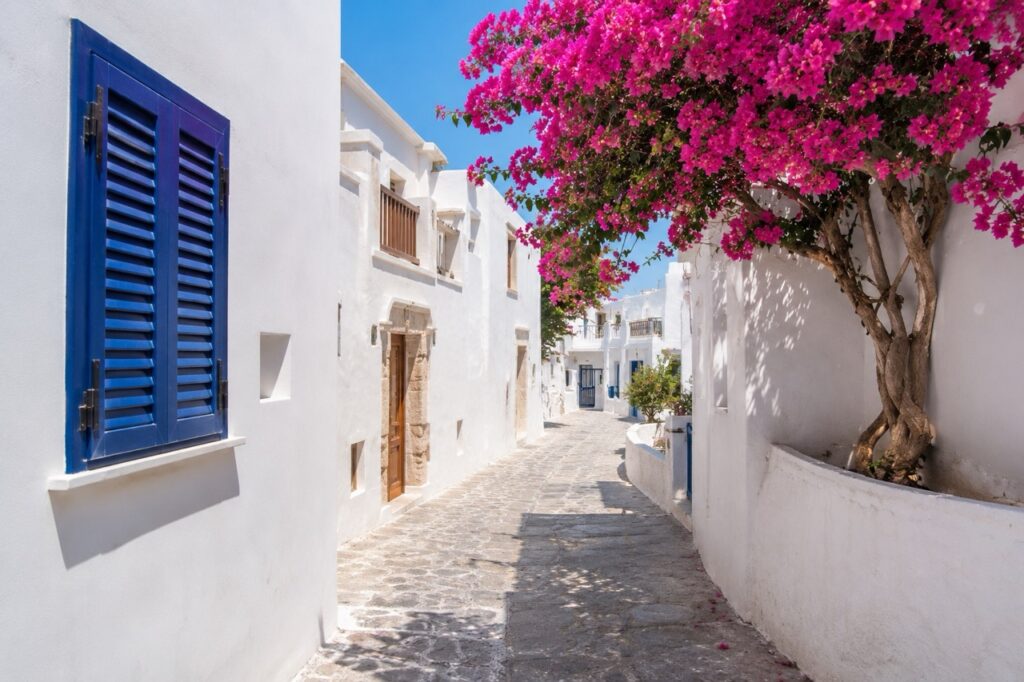
Month-by-Month Breakdown
January & February — The Quiet Island
Milos in winter is almost entirely local. Most tourist facilities close, ferry schedules thin out significantly, and the island returns to a pace that summer visitors never see.
Average temperatures hover between 8–14°C (46–57°F). Rain is possible. The Aegean is rough and cold.
Who should visit: Travelers interested in authentic Greek island life, off-season photography, or the catacombs and archaeological sites without queues. Budget travelers will find accommodation at a fraction of summer prices.
Who should avoid it: Anyone coming for beaches, boat tours, or the standard Milos experience.
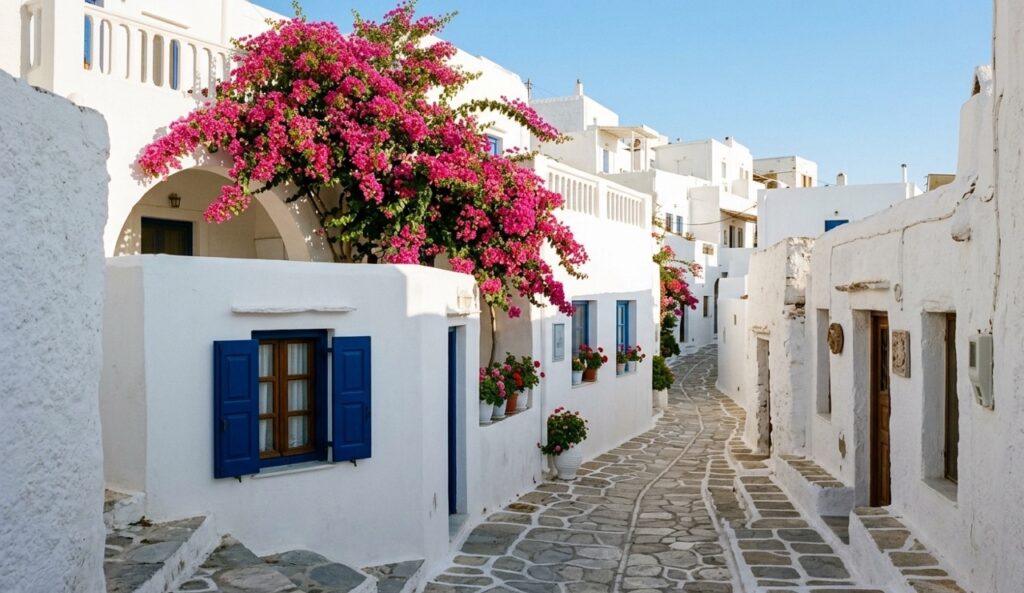
March — First Signs of Spring
March brings the first wildflowers across the volcanic hillsides and temperatures that climb toward 15°C (59°F) by the end of the month. Rain is still possible in early March but becomes less frequent.
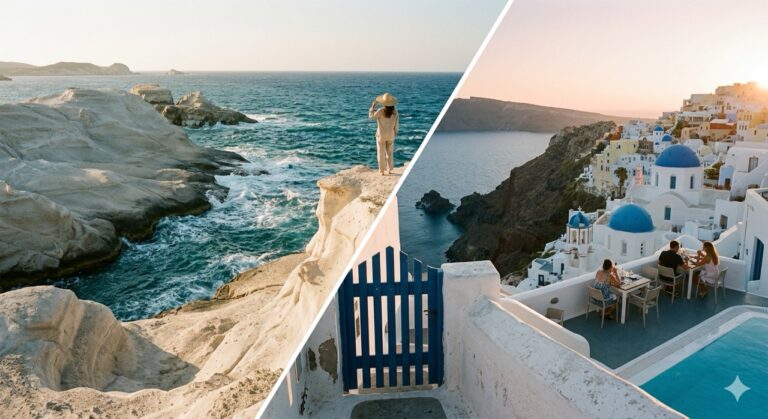
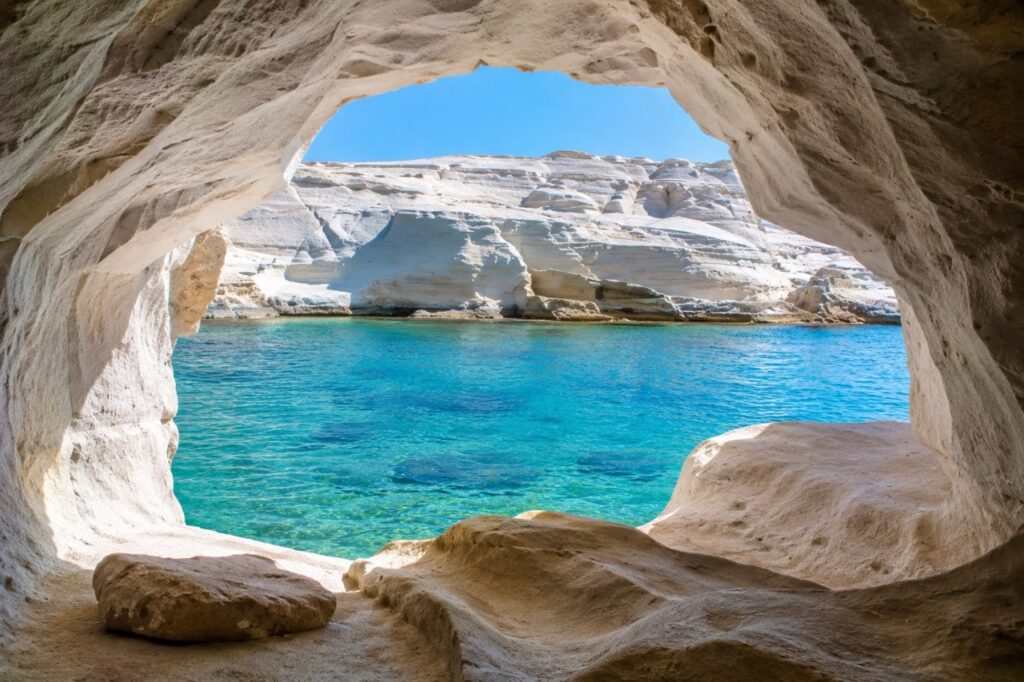
Sarakiniko is completely quiet. The rock formations glow with early spring light that summer visitors never see. For photographers, March offers unique conditions — dramatic skies, wildflowers against white rock, the Aegean deep blue without the summer haze.
Most tourist facilities are still closed. Limited restaurant and accommodation options.
Best for: Photography, hiking, complete solitude.
April — The Underrated Month
April is the month the island exhales.
The winter fishing boats are back in rotation. The taverna owners in Pollonia are repainting their chairs. The wildflowers — yellow, purple, white — cover the volcanic hillsides in a way that disappears completely by June. Nobody who arrives in August ever sees this version of Milos.
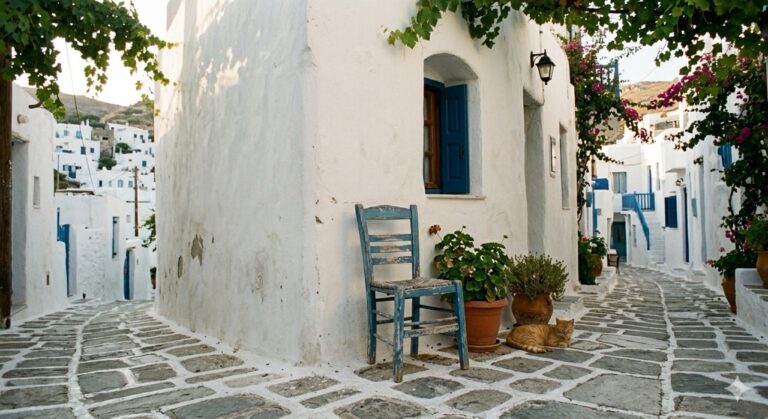
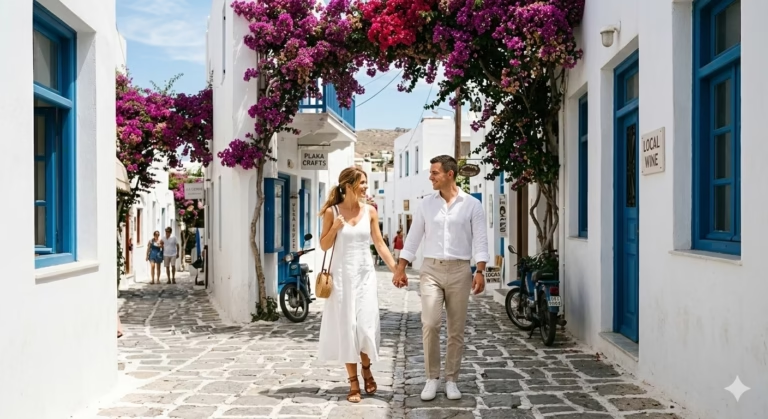
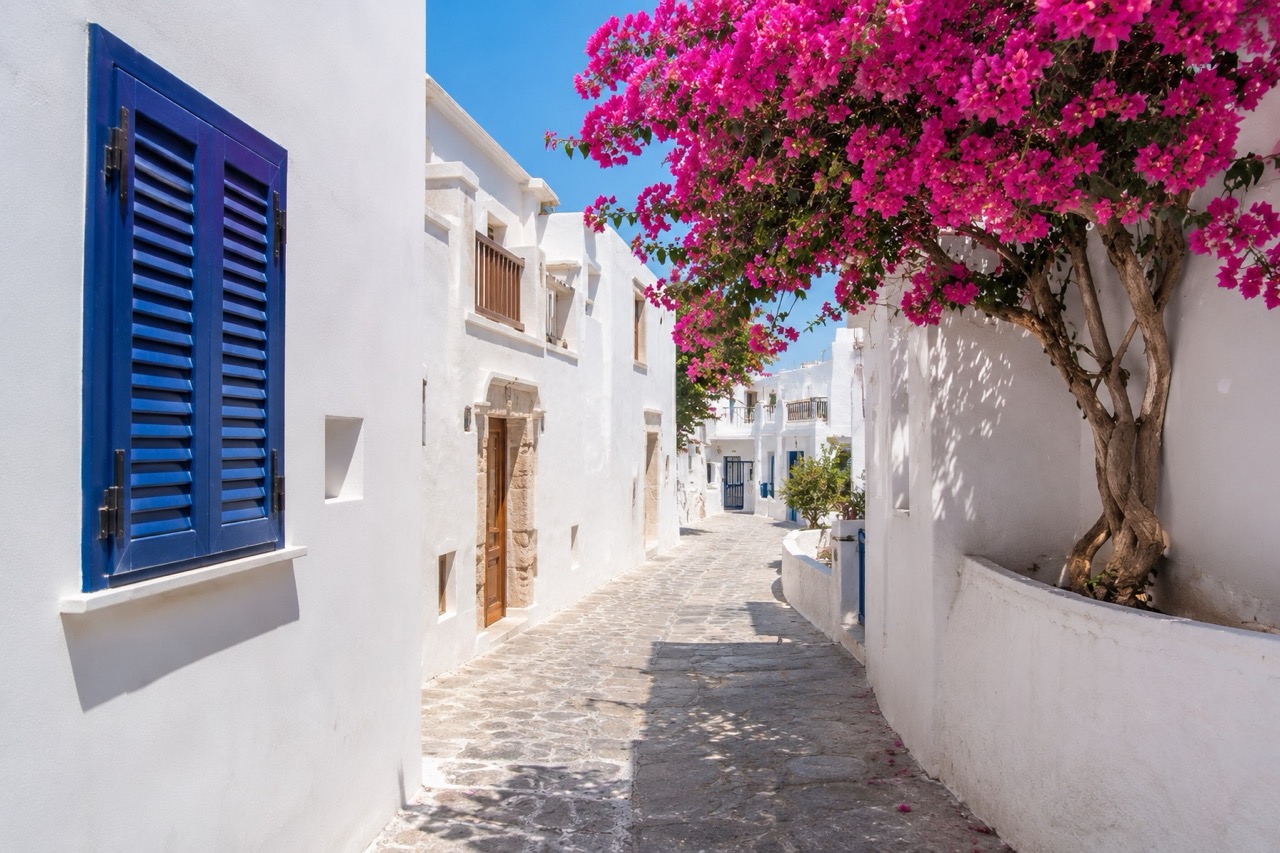
Temperatures reach 17–19°C (62–66°F) during the day with increasing sunshine as the month progresses. Rain is possible in early April but becomes rare by mid-month. Greek Orthodox Easter — which frequently falls in April — transforms Plaka into something genuinely moving: candlelight processions through narrow Cycladic streets, the smell of incense and grilled lamb, a celebration that has nothing to do with tourism and everything to do with the island itself.
What April gives you:
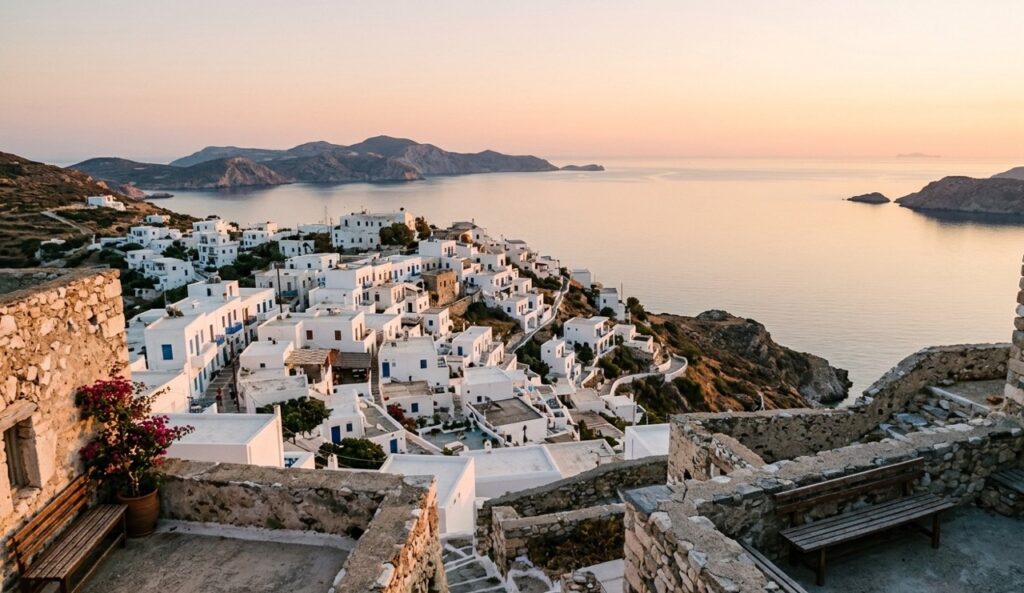
The Milos Catacombs with no queue. The Ancient Theater of Milos with no tour group blocking the view. Plaka village at golden hour with actual locals sitting at the kafeneion. Sarakiniko in the soft spring light with wildflowers growing from the volcanic rock — a combination that exists for exactly six weeks a year and then vanishes.
Hiking trails across the island are at their best in April. The heat that makes walking uncomfortable in July is completely absent. The volcanic landscape shows colors — rust, ochre, deep green — that the summer sun bleaches out.
Prices in April run 40–50% lower than August for equivalent rooms. A boutique suite in Pollonia that costs €280 per night in August can be found for €140 in April.
What April doesn’t give you:
Swimming. The sea sits at 16–17°C (61–63°F) — cold for most people. Brave swimmers and those accustomed to cooler Atlantic waters will manage, but April is not a beach month in the conventional sense.
Full tourist infrastructure. Some boat operators, beach tavernas, and western-coast accommodation haven’t opened yet in early April. By late April most things are running. Always confirm with specific operators before booking.
The locals who’ve watched Milos change over the past decade will tell you April used to be their favorite month to have friends visit — before the word got out. The island looks completely different. The hills are green. The air smells like thyme and rain. It’s the only month where Milos looks like it belongs to the land rather than the sea.
April summary: Best for culture, hiking, photography, and budget travelers who don’t need swimming. The Easter celebration in Plaka alone justifies the trip for the right traveler.
May — The Insider Month ⭐
The fishing boats are still the loudest thing in Pollonia harbor when May arrives. The tavernas have just reopened their terraces. The owners greet returning faces like old friends. This is Milos before the summer machine starts running.
May is when the people who know this island best choose to come. The sea reaches 19–20°C (66–68°F) by mid-month — cool but genuinely swimmable, especially with air temperatures in the mid-20s. By the last week of May, the water feels closer to June than April.
Temperatures average 23–25°C (73–77°F) during the day with consistent sunshine and virtually no rain. Daylight stretches to nearly 14 hours.
What May gives you that summer can’t:
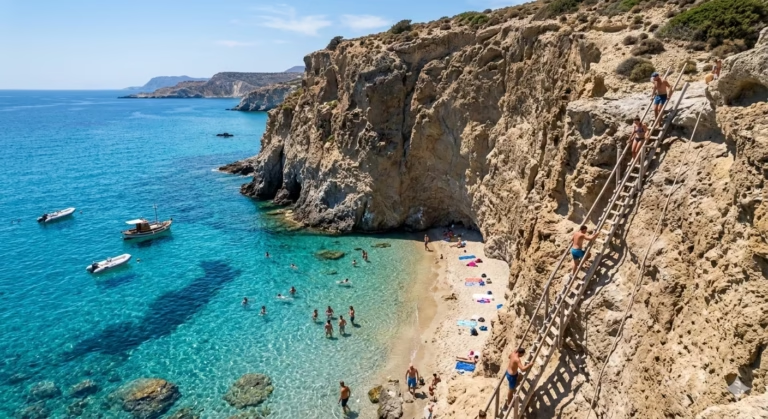
Sarakiniko at any hour without a crowd. The rock formations in May morning light — before the summer haze sets in — glow differently than they do in August. Photographers who know the island specifically target May for this reason.
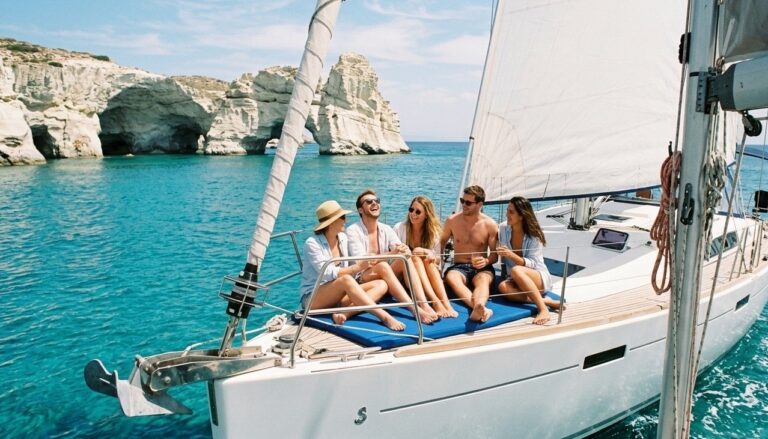
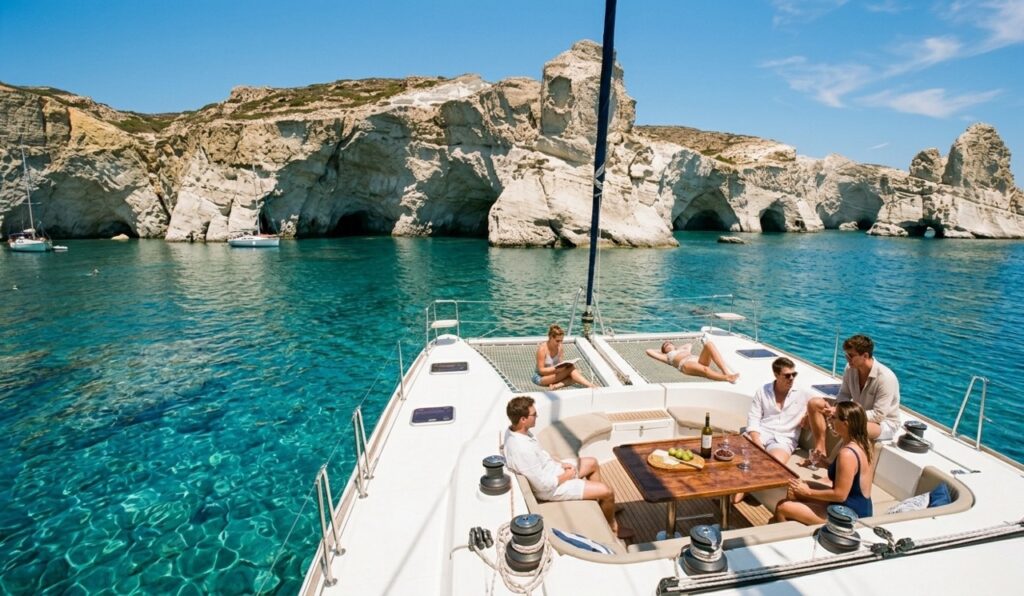
Boat tours to Kleftiko run daily with small groups. You book 1–2 weeks ahead instead of 6. The catamaran feels like a private charter because it nearly is.
The hidden beaches that require a 4×4 or a boat to reach are completely empty. Polyaigos island, directly across from Milos, feels uninhabited in a way that August simply doesn’t allow.
Prices run 30–40% lower than August for equivalent hotel rooms. The boutique properties in Pollonia — which book out entirely in July — have availability with 2–3 weeks notice. Syrma stays in Klima, nearly impossible to find in peak season, open up.
What May doesn’t give you:
Full nightlife. The island’s bars and clubs operate on reduced hours in May. If evenings matter as much as beaches, June is the stronger month.
Some properties in the far south or west coast open later — early May occasionally means a closed gate at a specific boutique property. Check directly with accommodation before booking.
The sea temperature gap between May and June is real. Strong swimmers find May water comfortable immediately. More casual swimmers may prefer waiting until the last week of the month or choosing sheltered south-facing beaches like Paleochori and Firiplaka where the water warms faster.
August visitors always ask why May feels so different. Same beaches, same villages, same white rock at Sarakiniko. The answer is simple: in May, Milos still belongs to the island. By August it belongs to everyone else. If you want the version the locals prefer, come in May.
May summary: Best overall value. Best conditions for photography and boat tours. Best availability across every accommodation type. The one month where Milos delivers everything it promises without requiring military-level advance planning.
Check May Hotel Availability on Booking.com → Compare May Prices on Expedia → Find May Deals on Hotels.com →
June — Best Overall Month ⭐
June is the strongest recommendation for most US travelers. Everything is operating — ferries, flights, all restaurants, all boat operators. The sea reaches 21–22°C (70–72°F), warm enough for full days in the water. Temperatures average 24–28°C (75–82°F) with consistent sunshine and 14+ hours of daylight.
The Meltemi wind — which disrupts boat tours in July and August — is minimal in June. This makes June the most reliable month for the Kleftiko boat tour and other full-day sea experiences.
Crowds exist but are manageable. Booking accommodation and boat tours 3–4 weeks ahead is sufficient — a significant contrast to August’s 6–8 week requirement.
Best for: Most travelers. Boat tour enthusiasts. Families. Anyone wanting the full Milos experience without peak-season chaos.
Browse June Tours on GetYourGuide → Compare June Options on Viator →
July — Peak Season, Plan Carefully
July is the most popular month on the island alongside August. Average temperatures hit 26–30°C (79–86°F). The sea reaches 24°C (75°F). Every beach is operating, every restaurant is full.
The Meltemi wind becomes a factor from mid-July onward — strong northern gusts that affect boat tour operations and make some exposed beaches choppy. Our Meltemi wind guide explains exactly which beaches stay calm when the wind picks up.
Accommodation books out 6–8 weeks ahead. Prices peak. Sarakiniko fills completely by 9:30 AM.
July is still a great time to visit — it just requires more preparation.
Essential July tips:
- Book accommodation 6–8 weeks ahead
- Reserve boat tours immediately after booking flights
- Arrive at Sarakiniko before 8 AM
- Choose morning boat departures over afternoon ones
- Check the Best Hotels in Milos guide for properties with free cancellation
August — Peak Season, Book Everything
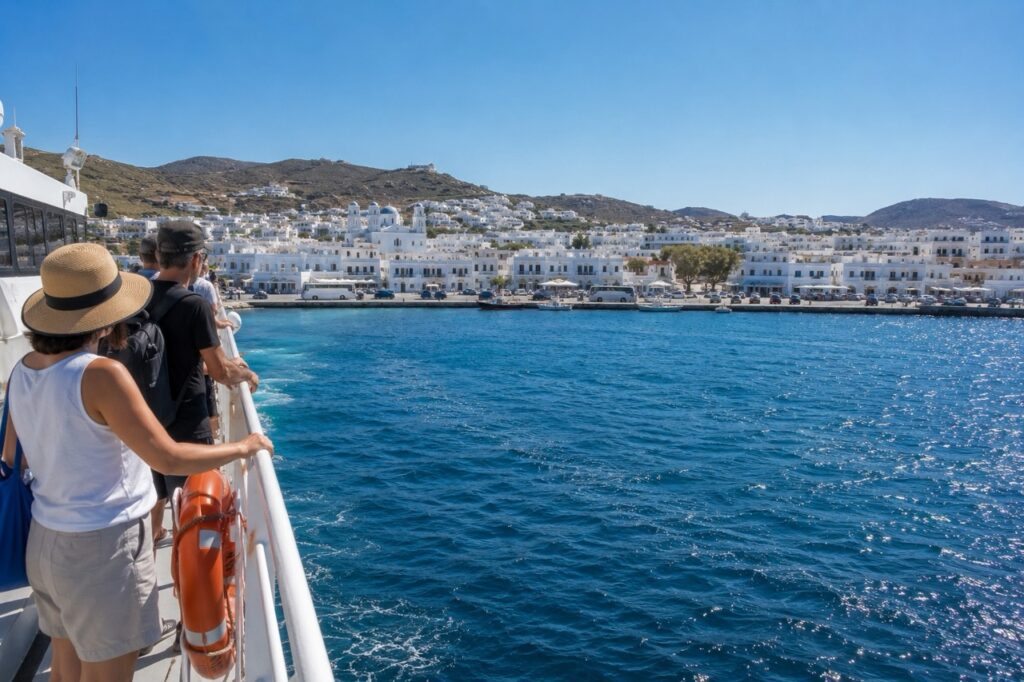
August is the most visited month. The sea is at its warmest — 25°C (77°F). Every day is sunny. The atmosphere is lively and cosmopolitan.
It is also the most challenging month to visit without preparation. The Meltemi wind is strongest in August, particularly in the afternoons. Boat tour cancellations happen. Parking at popular beaches requires arriving before 9 AM. Restaurant queues are real.
Hotels at this price point book out months ahead — particularly boutique properties and syrma stays in Klima. Budget accommodation fills early too.
August works well if: You book everything well in advance, plan beach mornings and village evenings, and accept the energy of peak season rather than fight it.
The locals have a saying about August: the island is full but the islanders are invisible. Everyone you meet in August arrived by ferry. The fishermen, the taverna owners, the people who actually live here — they’re still there, just harder to find. That changes the moment September arrives.
Check August Availability on Booking.com → Find August Deals on Hotels.com →
September — Best Kept Secret ⭐
September is arguably the best month on the island for travelers who know Milos well. The sea stays at 24–25°C (75–77°F) — as warm as August. Temperatures average 23–25°C (73–77°F) during the day. Sunshine remains consistent through the entire month.
The crowds thin dramatically after the first week of September. By mid-September, parking at Sarakiniko is effortless. Boat tour availability opens up. Restaurant prices drop back toward shoulder-season levels.
The Meltemi wind fades significantly in September, making it the most reliable month for full-day boat tours and calm sea conditions.
Best for: Couples. Return visitors. Anyone who missed June and wants the best possible late-season alternative.
September in Milos is what August promises but rarely delivers. The same sun, the same sea temperature, the same beaches — minus the parking queue and the restaurant wait. The fishing boats come back into Pollonia harbor in the evening and someone actually notices. That doesn’t happen in August.
Browse September Tours on GetYourGuide → Compare September Prices on Viator → Read September Reviews on Tripadvisor →
October — The Underrated Autumn Month ⭐
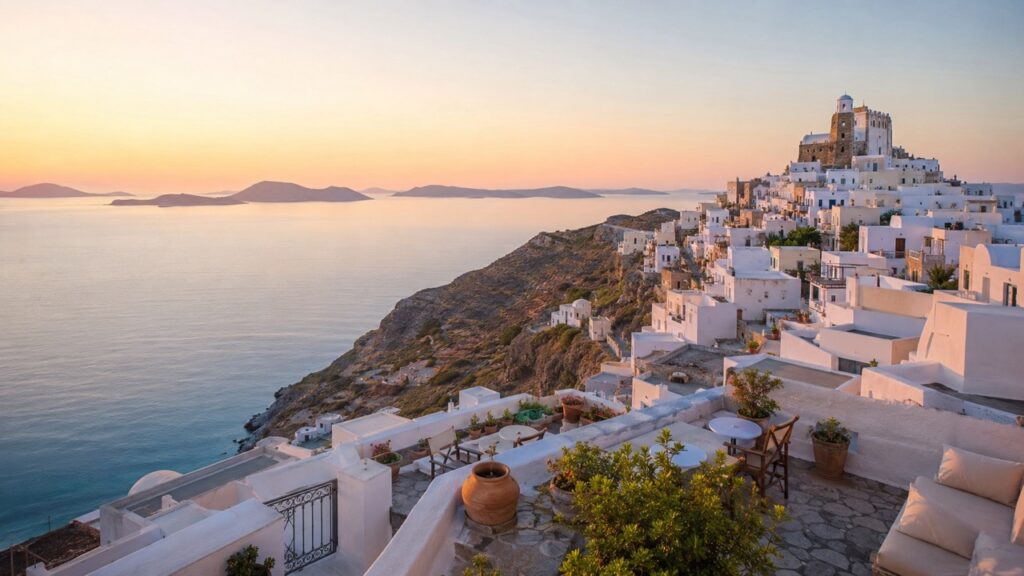
The summer crowds left three weeks ago. The taverna owner in Adamas finally has time to sit down and talk. The sea is still 21–22°C (70–72°F) — warmer than June — and the beaches are nearly empty.
This is October in Milos, and almost nobody from the US knows about it.
Temperatures stay at 20–22°C (68–72°F) during the day. The light changes in October — lower in the sky, warmer in tone, hitting the white volcanic rock at Sarakiniko in a way that summer’s harsh overhead sun never achieves. Photographers who know this island well often specifically target October for this reason.
What October gives you:
The Kleftiko boat tour with a small group, calm seas, and no Meltemi wind. October is one of the most reliable months for full-day boat experiences — the wind has faded, the operators are still running, and you’re rarely sharing the caves with more than a handful of other swimmers.
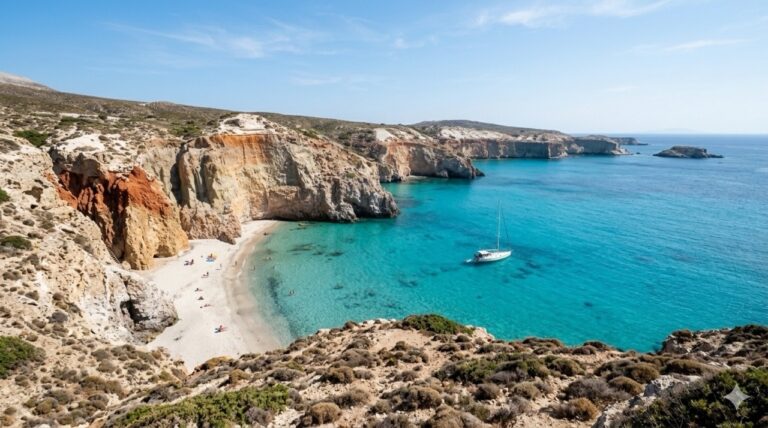
Hidden beaches that were packed in August are empty again. The western coast dirt tracks feel manageable without the summer heat. A rental car in October costs roughly half what it does in August — and finding an automatic is actually possible.
Syrma stays in Klima — the traditional boathouses above the water — become available again after selling out through the entire summer. Waking up to the sound of the Aegean in October, with the fishing boats heading out at dawn and nobody else on the waterfront, is the version of Milos that locals describe when they explain why they stayed.
Prices across every accommodation category drop significantly in October. Boutique properties that cost €300+ per night in peak season are available for €130–€160. Most restaurants remain open through the month, and the ones that do stay open are the good ones — the places that don’t need August traffic to survive.
What October doesn’t give you:
Nightlife. The bars and clubs that run until 4 AM in August are closed or running on minimal hours. October evenings in Milos are taverna dinners, early sunsets, and quiet harbor walks — which for many travelers is exactly the point.
Late October brings occasional rain days. They’re usually short — a morning of clouds followed by a clear afternoon — but they’re real. If you need guaranteed sunshine every day, push your trip to early October rather than late.
October is when the island remembers what it is. The fishermen’s nets are back on the harbor walls. The taverna owners are cooking for people they actually know. Walk into Adamas on an October evening and you’ll understand why people who came here once for a summer holiday ended up building a life here. The place makes sense in October in a way that August doesn’t allow.
October summary: Best sea-to-crowd ratio of any month. Best conditions for boat tours after the Meltemi fades. Best photography light of the year. Significantly lower prices with most facilities still operating. Genuinely one of the best-kept secrets in Cycladic travel.
Check October Hotel Availability on Booking.com → Compare October Prices on Expedia → Find October Deals on Hotels.com →
November & December — Off-Season
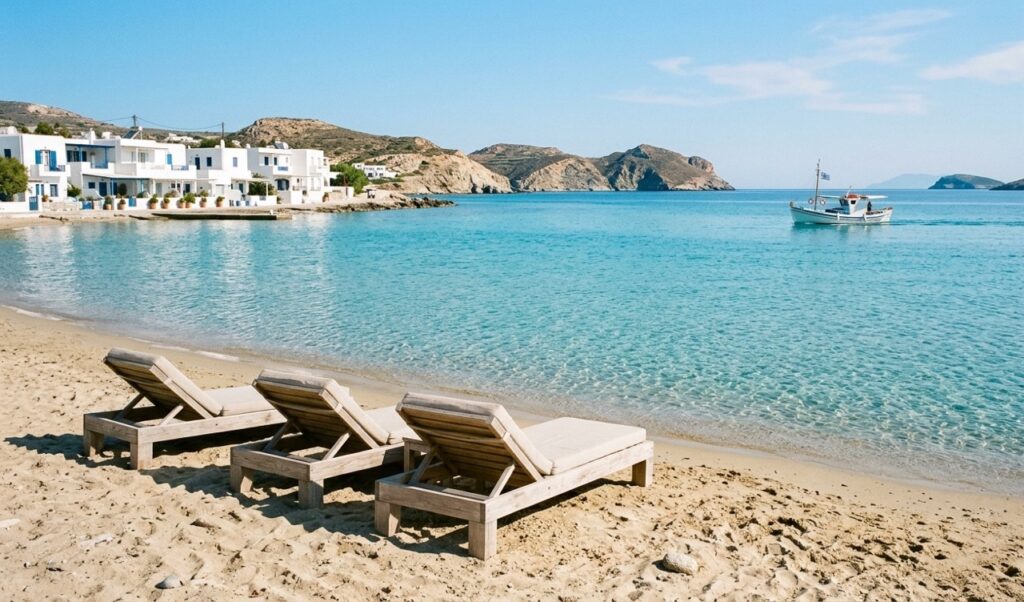
Most tourist facilities close in November. Ferry schedules reduce. Rain becomes frequent. The island contracts back to its local rhythm.
Interesting for travelers who want to understand what Milos actually is when the tourists leave — the archaeological sites, the catacombs, the villages at their most authentic. Not the right trip for beach-focused visitors.
What the Meltemi Wind Means for Your Planning
The Meltemi is a strong, dry northern wind that affects the entire Aegean — but hits Milos particularly hard given its exposed position in the southwestern Cyclades. It blows most consistently from mid-July through August, typically peaking in the afternoons.
Its main impact on travelers:
- Boat tours may be shortened, rerouted, or cancelled on high-wind days
- North-facing beaches like Sarakiniko become choppy and less suitable for swimming
- South-facing beaches like Firiplaka and Paleochori stay calm when the north wind blows
Our dedicated Meltemi wind guide for Milos explains exactly how to choose your beach based on wind direction — essential reading if you’re visiting in July or August.
Best Time by Travel Style
| Travel Style | Best Month(s) | Why |
|---|---|---|
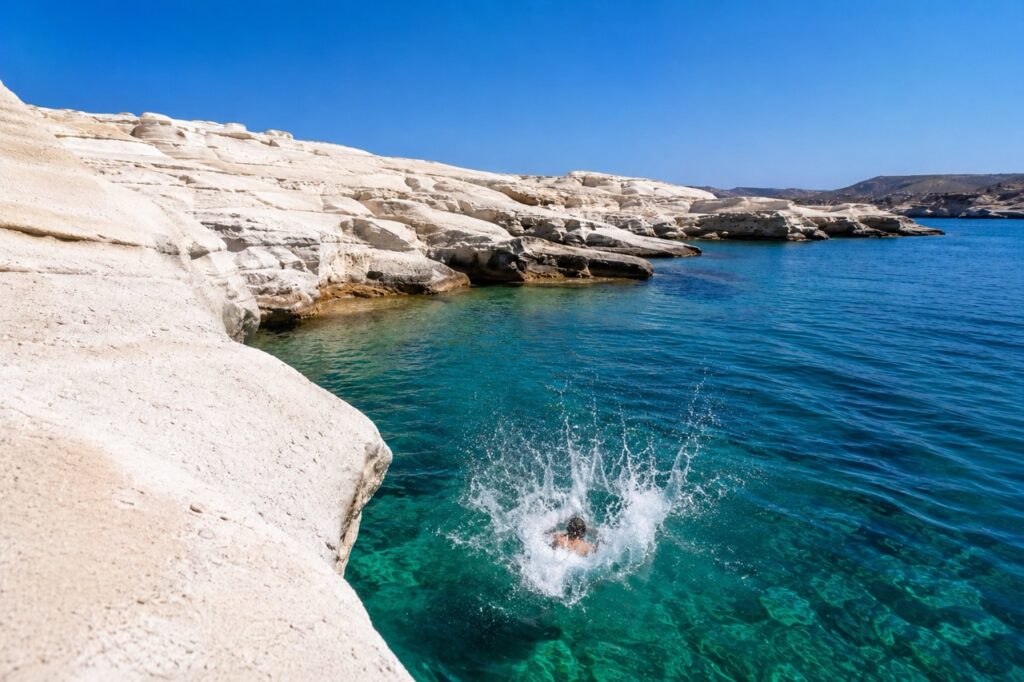
| Beach & swimming | June, September | Warm sea, manageable crowds |
| Boat tours | June, September | Minimal Meltemi, full availability |
| Photography | March, May, October | Best light, empty landscapes |
| Hiking | April, May, October | Cool temperatures, wildflowers |
| Families | June, early September | Calm sea, all facilities open |
| Budget | April, May, October | 30–40% lower than peak |
| Honeymoon | June, September | Romantic atmosphere, not overcrowded |
| First-time visitor | June | Everything open, manageable crowds |
Booking Timeline: When to Reserve What
|
|---|
For hotel recommendations across every budget, our Best Hotels in Milos guide covers every property worth considering with current 2026 pricing.
Browse All Options on Booking.com → Compare Prices on Expedia → Find Deals on Hotels.com →
How the Season Affects Getting to Milos
Ferry and flight schedules from Athens expand significantly in peak season and contract in winter. A few practical notes:
- Flights from Athens operate year-round but with reduced frequency November–March
- High-speed ferries (2.5 hours from Piraeus) run daily June–September, less frequently in shoulder season
- Conventional ferries (5–6 hours) run year-round but on reduced winter schedules
- Island-hopping connections to Santorini, Paros, Sifnos, and Folegandros are most reliable June–September
For the complete breakdown on reaching Milos from Athens — including price comparisons and booking tips — [Athens to Milos Ferry vs Flight Guide ]
FAQ
What is the best month to visit Milos?
June and September are the strongest overall choices. June offers peak summer conditions with manageable crowds. September combines August’s warm sea with noticeably fewer visitors and lower prices.
Is August a good time to visit Milos?
Yes — but it requires advance planning. Book accommodation 8–12 weeks ahead, reserve boat tours as soon as flights are confirmed, and plan early-morning beach visits to beat the crowds and parking issues.
When is Milos least crowded?
January through April and October through December see the fewest visitors. May and October offer the best balance of quiet conditions and open tourist facilities.
How hot does Milos get in summer?
July and August average 26–30°C (79–86°F) during the day. The Meltemi wind provides some relief but can affect sea conditions. Shade at beaches like Sarakiniko is non-existent — plan accordingly.
Is the sea warm enough to swim in May?
By mid-to-late May, yes — the sea reaches 19–20°C (66–68°F), which most swimmers find comfortable, especially with air temperatures in the mid-20s. Early May can feel cold in the water.
When does the Meltemi wind blow in Milos?
Primarily mid-July through August, with afternoons seeing the strongest gusts. It fades significantly in September. See our Meltemi wind guide for beach-specific advice.
Are hotels cheaper outside of peak season?
Significantly. May and October typically run 30–40% lower than August rates for equivalent properties. April and November can be 50–60% lower. See our Milos Budget Guide for a full cost breakdown by season.
When should I book a Kleftiko boat tour?
June: 2–3 weeks ahead. July–August: 4–6 weeks ahead. September: 1–2 weeks ahead. See our Best Boat Tours in Milos guide for platform comparisons and current availability.
What is the best time to visit Milos for families?
June and early September offer the best combination of calm seas, warm water, and all facilities operating. See our Milos for Families guide for beach-by-beach suitability ratings.
Already decided on your timing? The 5-Day Milos Itinerary builds a complete day-by-day plan around whichever season you choose. Once your dates are set, our Best Things to Do in Milos guide is the best place to start booking experiences for your trip.